
Leadership Alignment: Language That Survives Monday
The strongest transformation narrative is useless if the next meeting, owner, and decision path still look exactly the same.
The signal: everyone agrees, but nothing changes
Leadership teams often mistake agreement for alignment. The meeting ends well. The language sounds shared. The ambition is clear. People nod to the same priorities, the same transformation goals, the same value ambition, and the same need to move faster. For a moment, the room feels aligned. Then Monday arrives, and the system behaves exactly as it did before.
That is the signal. Alignment did not survive contact with work. The words were strong enough for the room, but not strong enough for the operating model. The narrative created emotional agreement, but it did not create owners, decision paths, handoff logic, governance rhythm, or a next move that people could use when pressure returned.
This is why many transformation programs have a language problem that is really an architecture problem. Leaders use terms like ownership, accountability, speed, simplification, value, adoption, collaboration, and governance. The words are correct. The failure is that each function can interpret them differently and still claim alignment.
Why executive language breaks
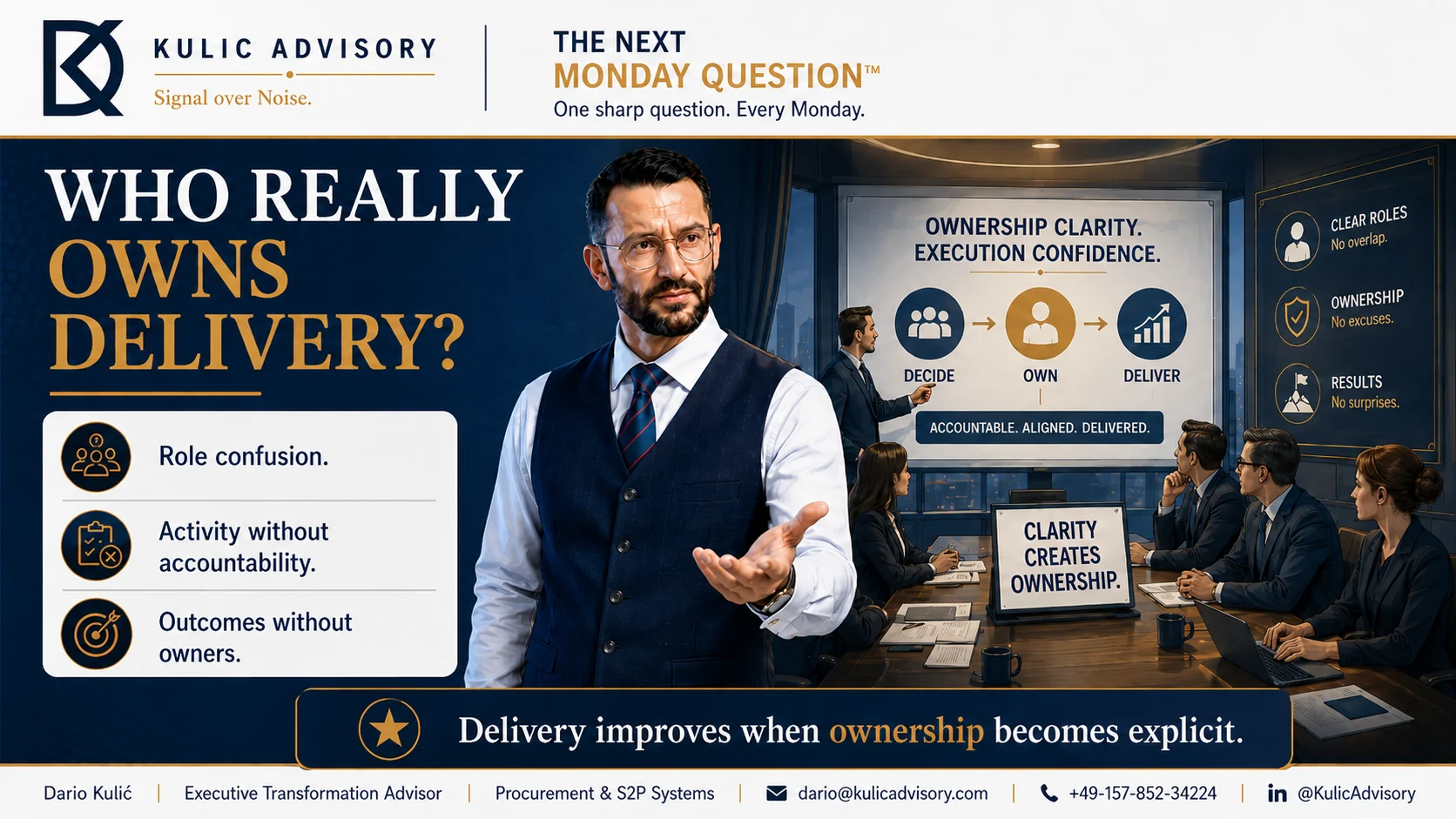
Executive language breaks when it is too abstract to govern behavior. "We need stronger ownership" sounds clear until the organization asks who owns the end-to-end flow, who owns the exception, who owns the decision, who owns value realization, and who owns the trade-off when functions disagree. If the sentence cannot answer those questions, it is not yet operating language. It is aspiration.
"We need more speed" sounds clear until governance slows a decision because no one knows which risk is being protected. "We need more collaboration" sounds clear until collaboration becomes a substitute for accountability. "We need business ownership" sounds clear until business stakeholders are asked to approve outcomes without being given a real role in the decision architecture. The words are not wrong. They are unfinished.
Leadership alignment becomes useful only when the language is specific enough to change the next meeting. A useful sentence names the break, the owner, the decision, the trade-off, and the next move. It does not hide behind a principle that everyone can support without changing anything.
Monday is the real test
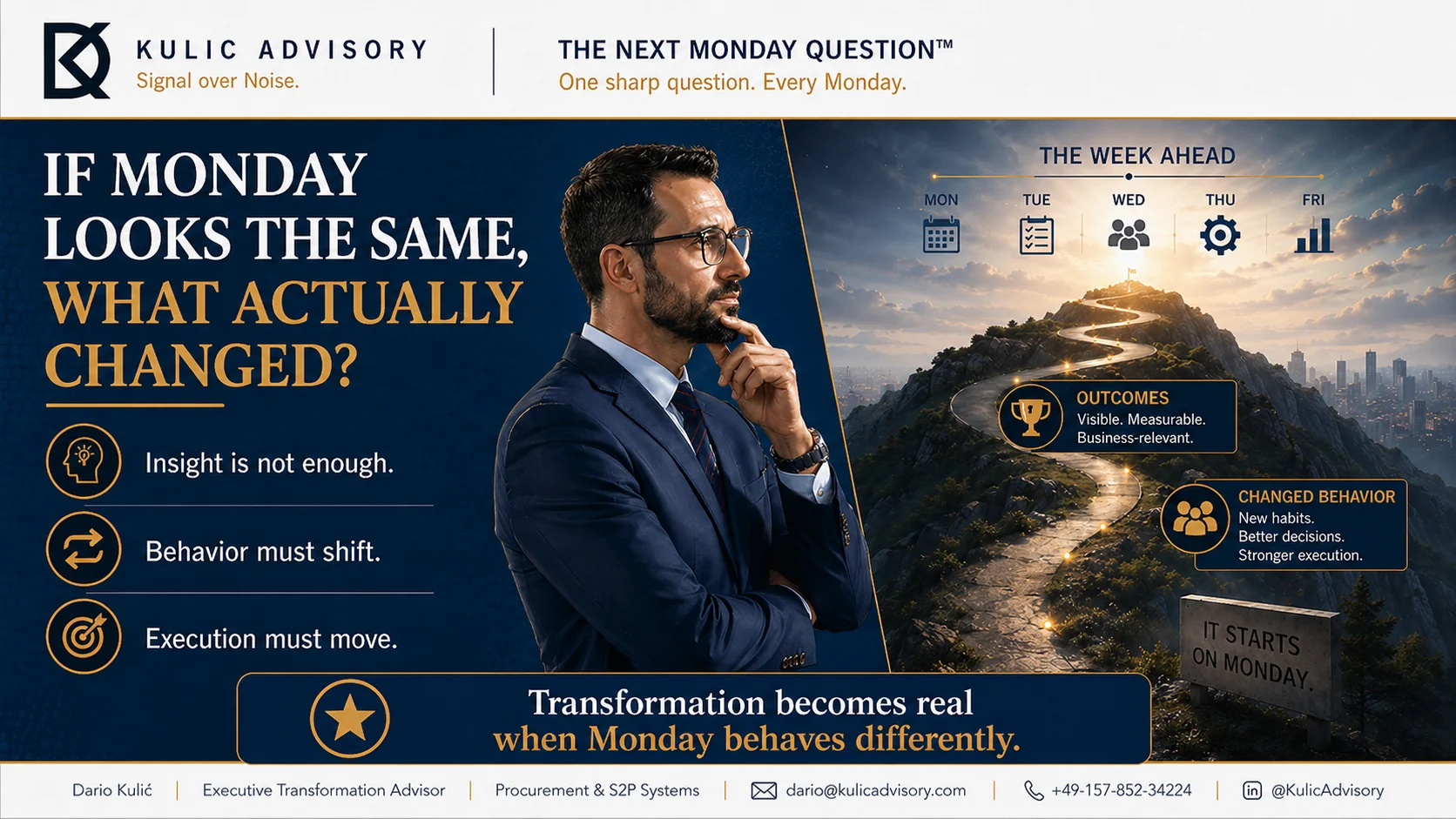
The test of leadership alignment is not whether the steering committee liked the narrative. The test is whether Monday becomes different. Does the next meeting have a clearer decision? Does one owner replace a group of interested stakeholders? Does a handoff become visible? Does a governance forum stop discussing everything and start deciding the few things it exists to decide? Does a leader know what to stop, start, or clarify in the next thirty days?
If Monday is unchanged, the alignment was probably too ceremonial. It may have improved sentiment, but it did not improve the execution system. It may have made the transformation easier to explain, but not easier to run. It may have created a shared storyline, but not a shared operating reality.
This distinction matters because many organizations overinvest in communication when they actually need decision design. They run another town hall, another cascade, another workshop, another narrative refresh, or another leadership offsite. Sometimes that helps. Often it simply broadcasts language that the system still cannot execute.
From narrative to operating language
Operating language is different from communication language. Communication language helps people understand the message. Operating language helps people act when the message meets friction. It defines what the words mean in decisions, roles, governance, process, and value tracking.
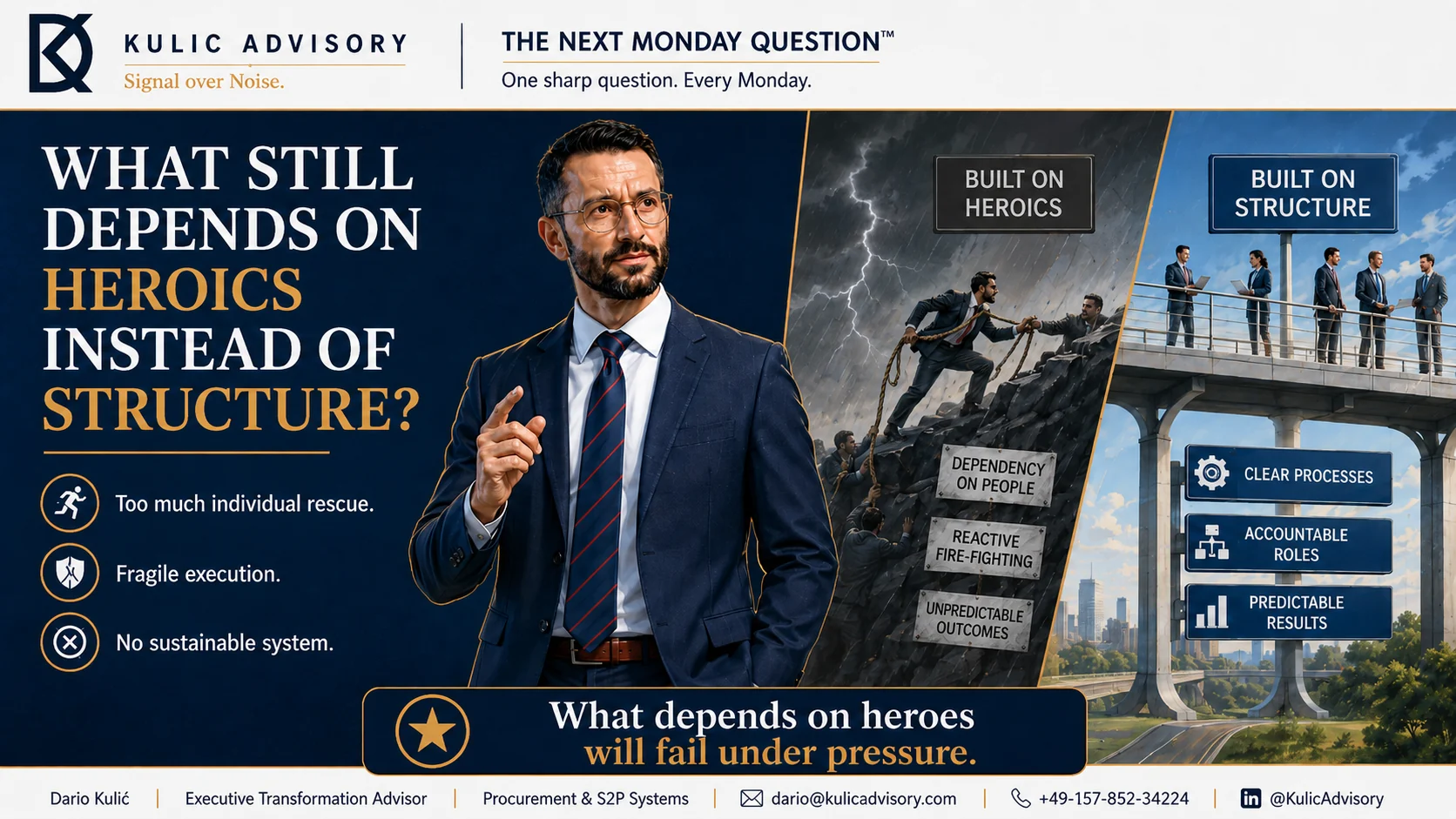
For example, "ownership" becomes operating language when it says who owns the outcome, who owns the process, who owns the decision, who owns the handoff, and who is informed but not accountable. "Speed" becomes operating language when it says which decisions must move without escalation and which risks genuinely require governance. "Value" becomes operating language when it says who tracks realization, where the baseline sits, and which adoption signal proves the change is working.
The job is not to make the language longer. The job is to make it more usable. The strongest leadership language is often simple because the hard work has already been done underneath it. It is short because the architecture is clear, not because the problem was simplified away.
Where alignment usually leaks
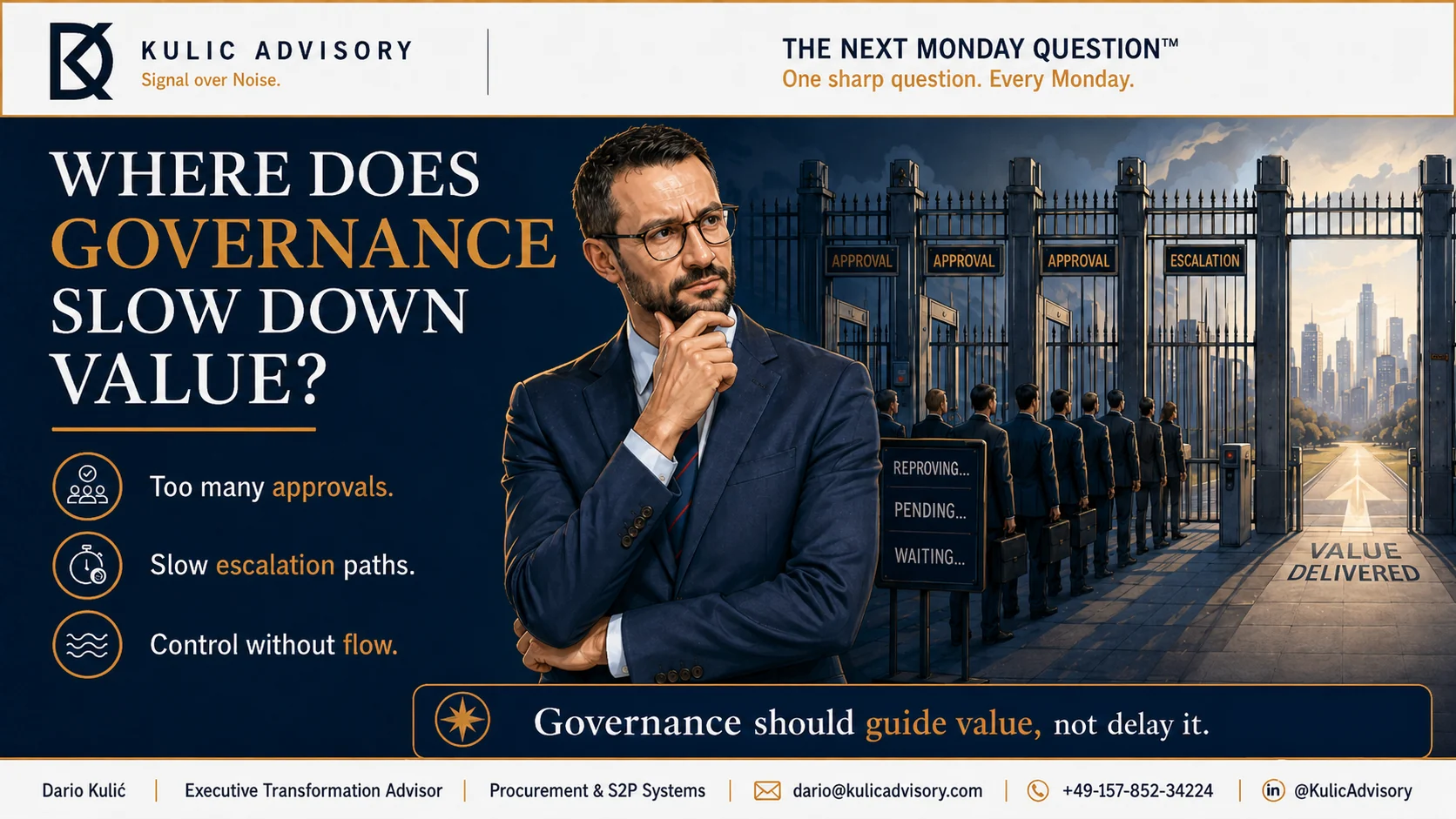
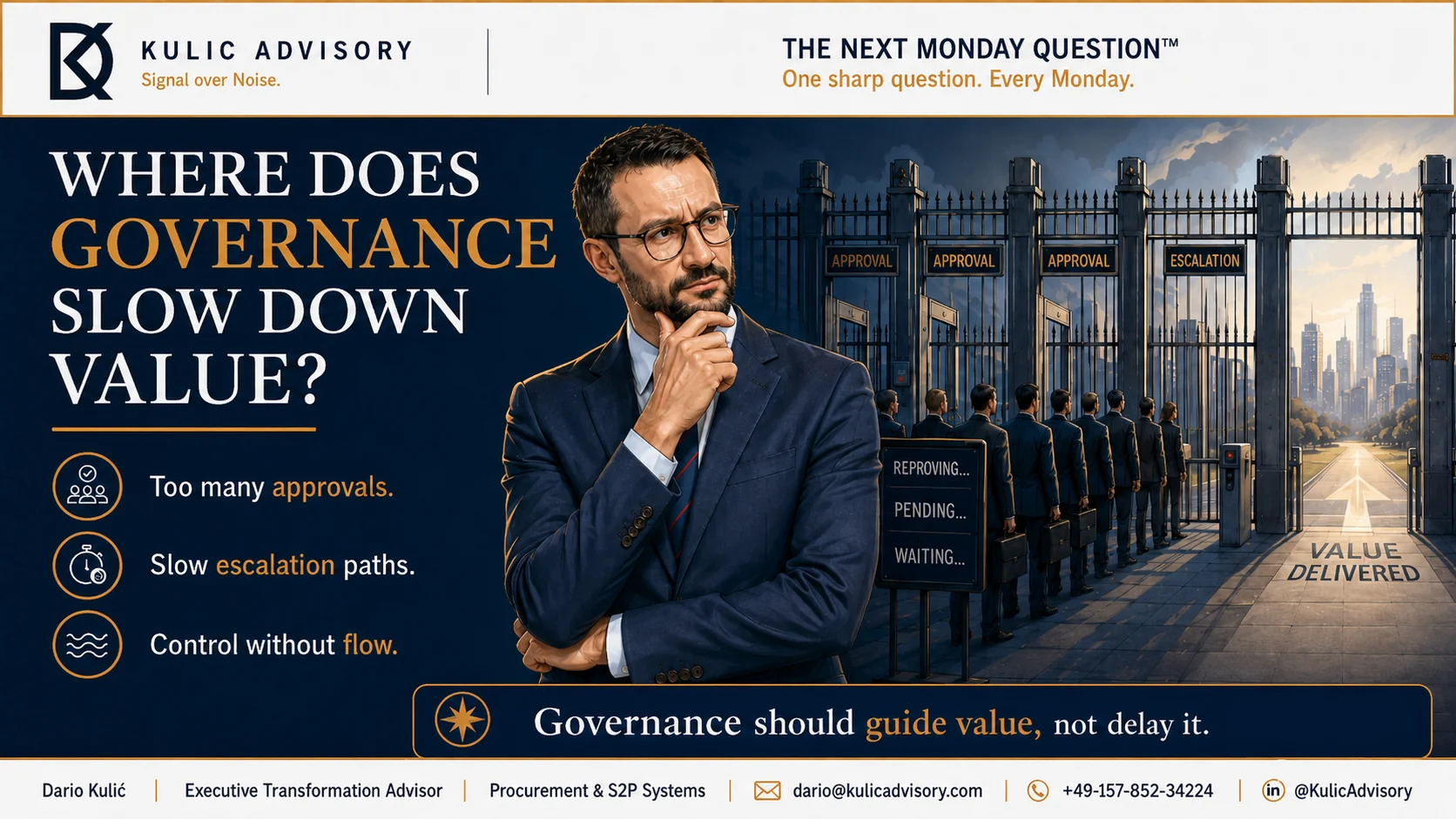
Alignment leaks in predictable places. It leaks between strategy and process ownership, where goals are agreed but the operating route is unclear. It leaks between procurement and business stakeholders, where value is expected but accountability is distributed. It leaks between IT and process owners, where technology decisions move faster than operating-model clarity. It leaks between governance and delivery teams, where escalation becomes the default response to ambiguity.
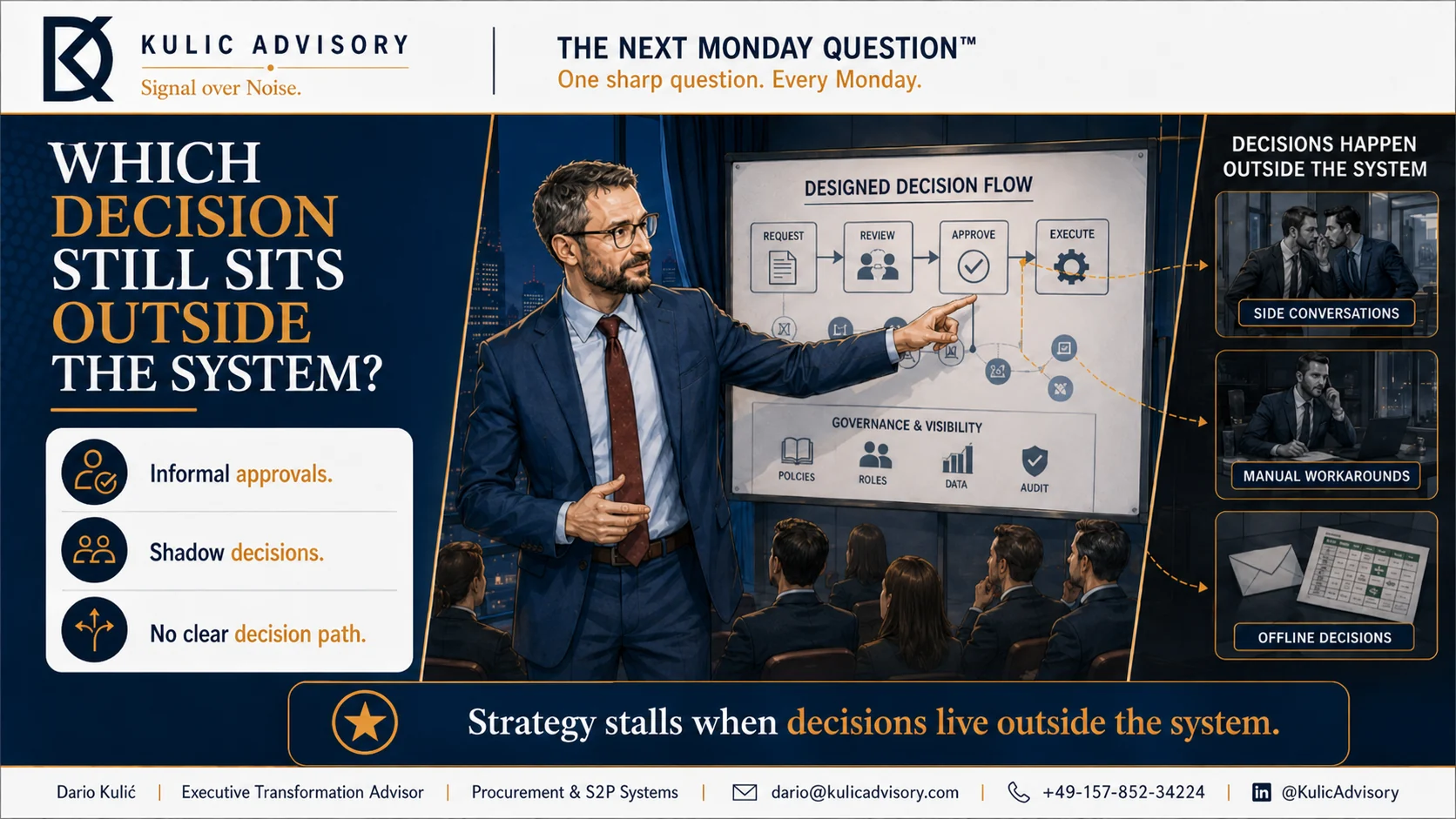
It also leaks inside leadership teams. Leaders may agree on the transformation headline but disagree quietly on risk appetite, standardization, decision rights, resourcing, timing, or what "good enough" looks like. Those disagreements do not disappear because the slide uses better words. They return later as delays, exceptions, rework, and political negotiation.
A good alignment session therefore does not only ask what leaders support. It asks what they are willing to decide. It asks which trade-off is real. It asks which owner has the mandate to move. It asks what must be true on Monday morning for the alignment to become operational.
The advisory move
The advisory move is to translate leadership intent into a working execution system. That means taking the shared narrative and pressure-testing it against ownership, decisions, handoffs, governance, technology readiness, people capability, and value realization. If the language cannot survive those dimensions, it is not ready to guide execution.
This is where keynotes, workshops, executive sessions, and advisory conversations become useful. Not as inspiration alone, but as a way to create language that leaders can use in real decisions. The output should not be applause. The output should be clearer Monday behavior: one owner, one decision path, one sharper next move.
Leadership alignment is not a mood. It is a system property. When the system is clear, leaders can speak plainly and teams can act without translating every sentence through politics. When the system is unclear, even beautiful language becomes noise. The work is to make the language carry execution.
The practical test
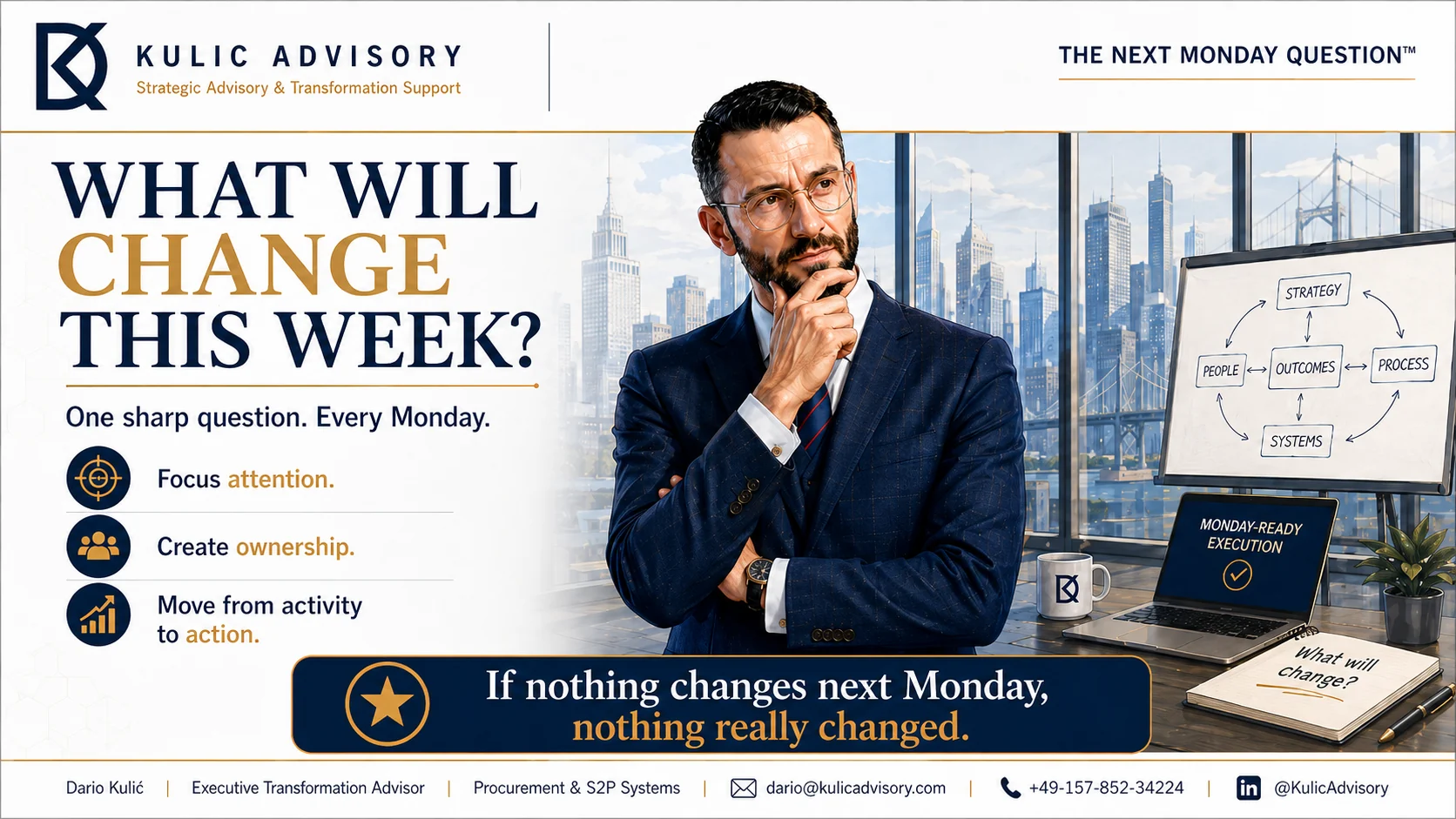
Before the next alignment session ends, ask five questions. What exact issue are we naming? Who owns the next decision? Which handoff must change? Which forum will decide and which forum will only inform? What will be visibly different next Monday? If the room cannot answer, the narrative is not finished. It may be promising, but it is not yet executable.
The best transformation language is not the language that sounds most impressive. It is the language that survives Monday. It helps leaders stop buying noise, stop blaming people, and start redesigning the system that makes execution possible.
01Next Monday sequence
Next Monday sequence
Eight prompts that turn the narrative into an operating move.
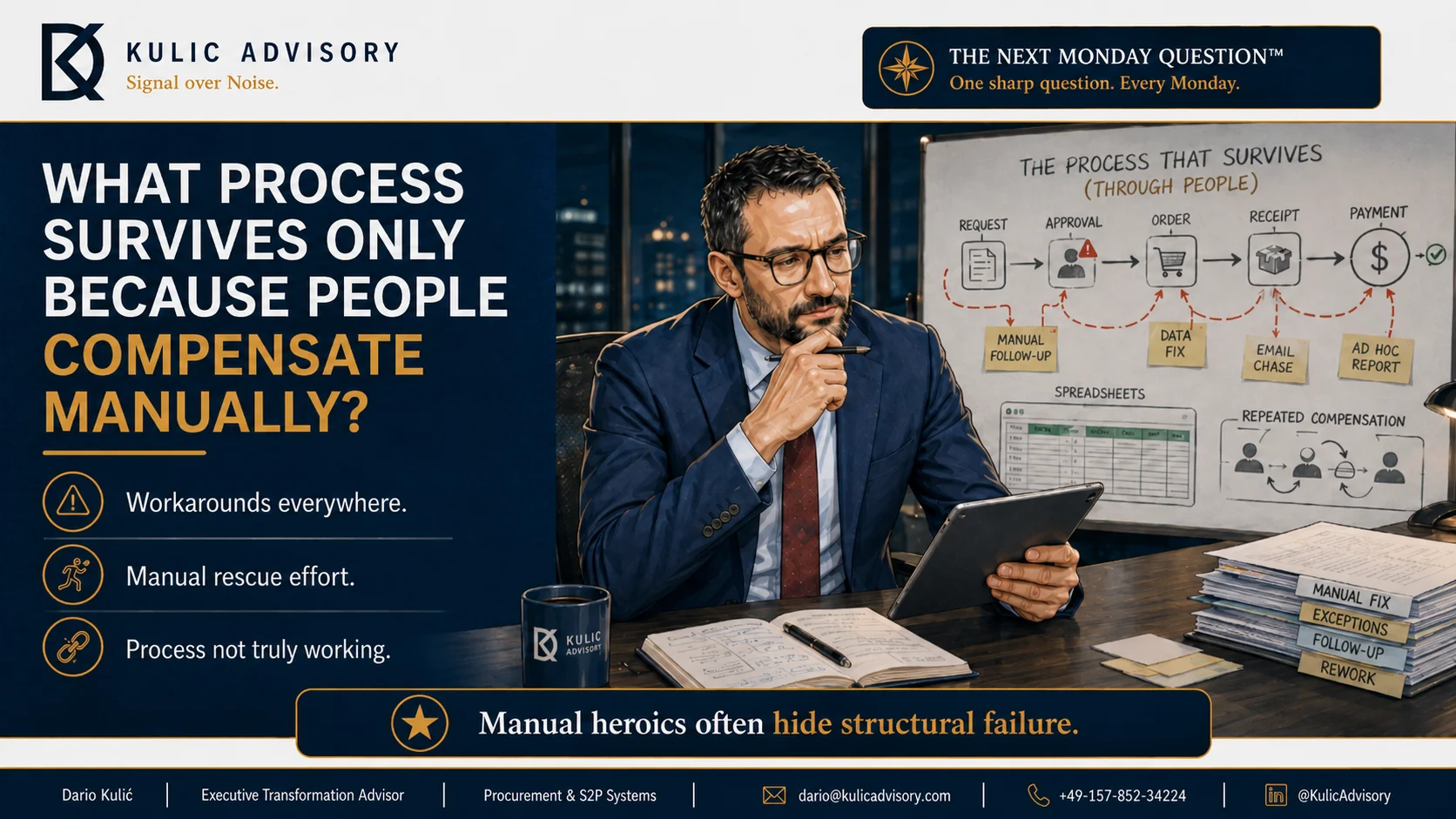
Use the sequence as a practical test: where does the system need to behave differently when the working week begins?
Decision bridge
If this signal feels familiar
Do not start another program yet. First decide what kind of diagnostic step fits the signal.
- One KPI or blocker? Start Value Snapshot™.
- Complex ownership or governance issue? Book Executive Diagnosis.
- Cross-functional operating model break? Request System Review.
Read Advisory Paths if you need the route map before choosing.