Buyer lanes

Find the case that feels closest to your room.

These are not invented client claims. They are sanitized patterns: symptom, system break, intervention logic, and the next move a leadership team can actually decide.

01

CPO / Procurement Transformation

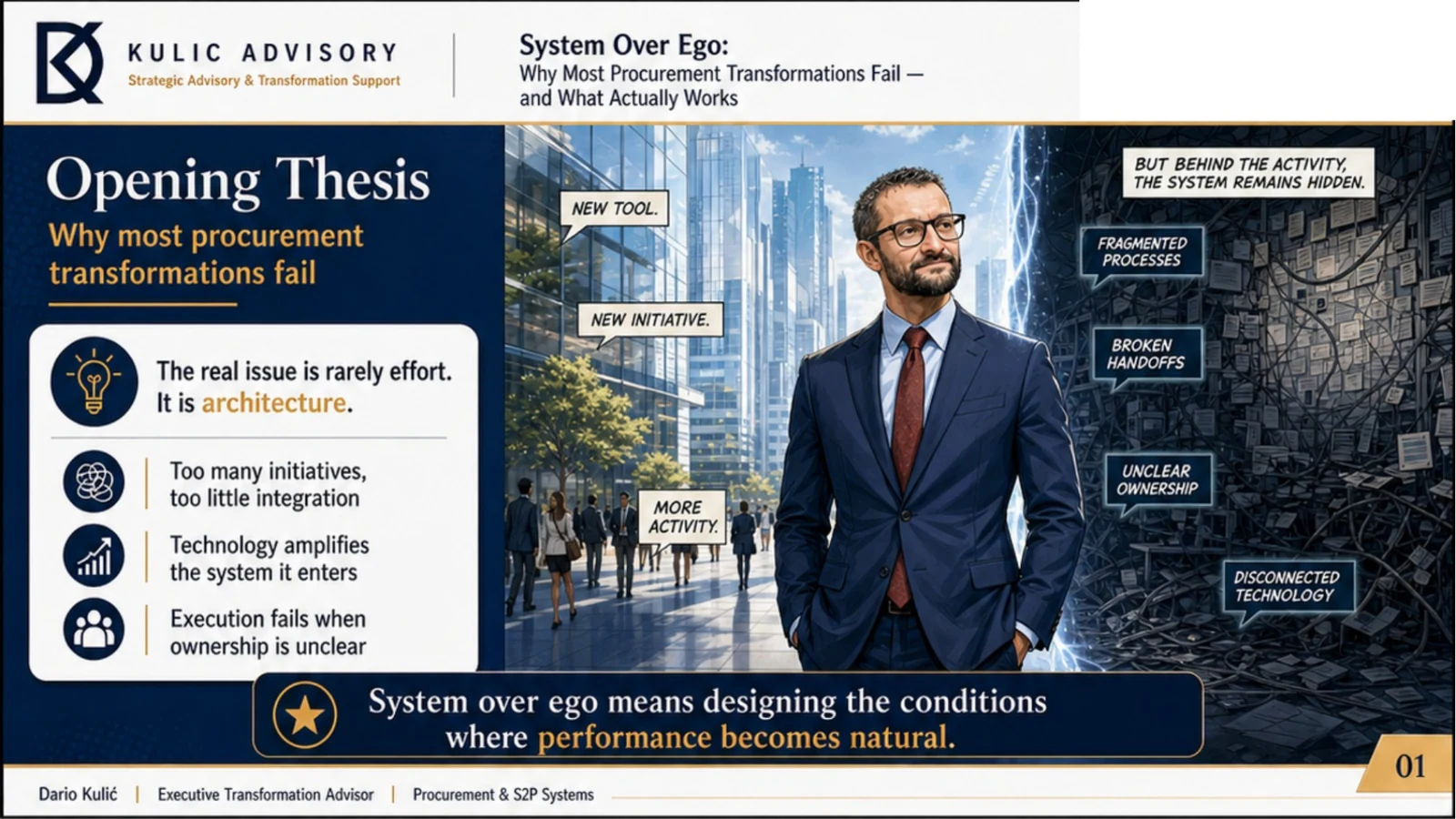
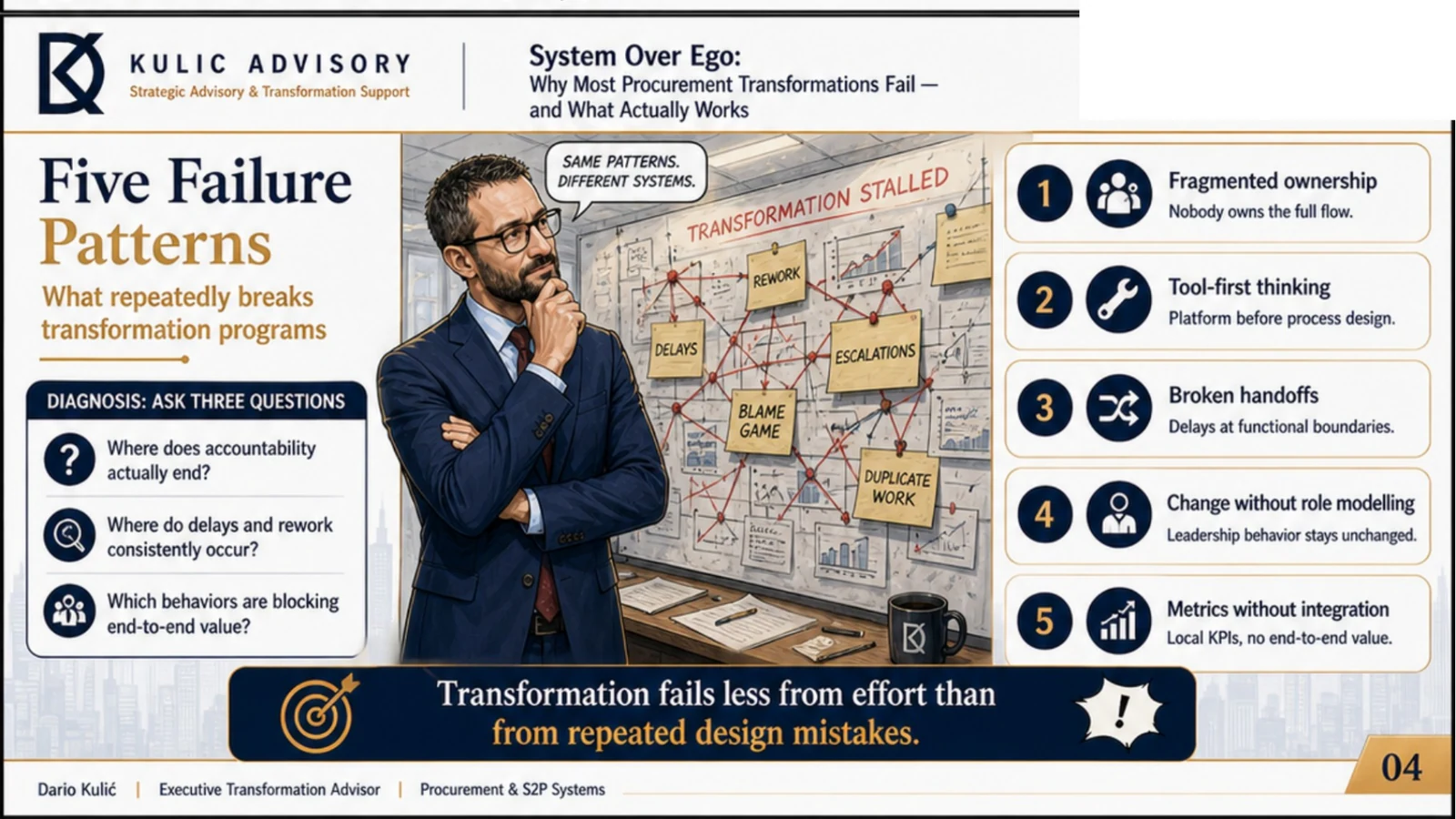
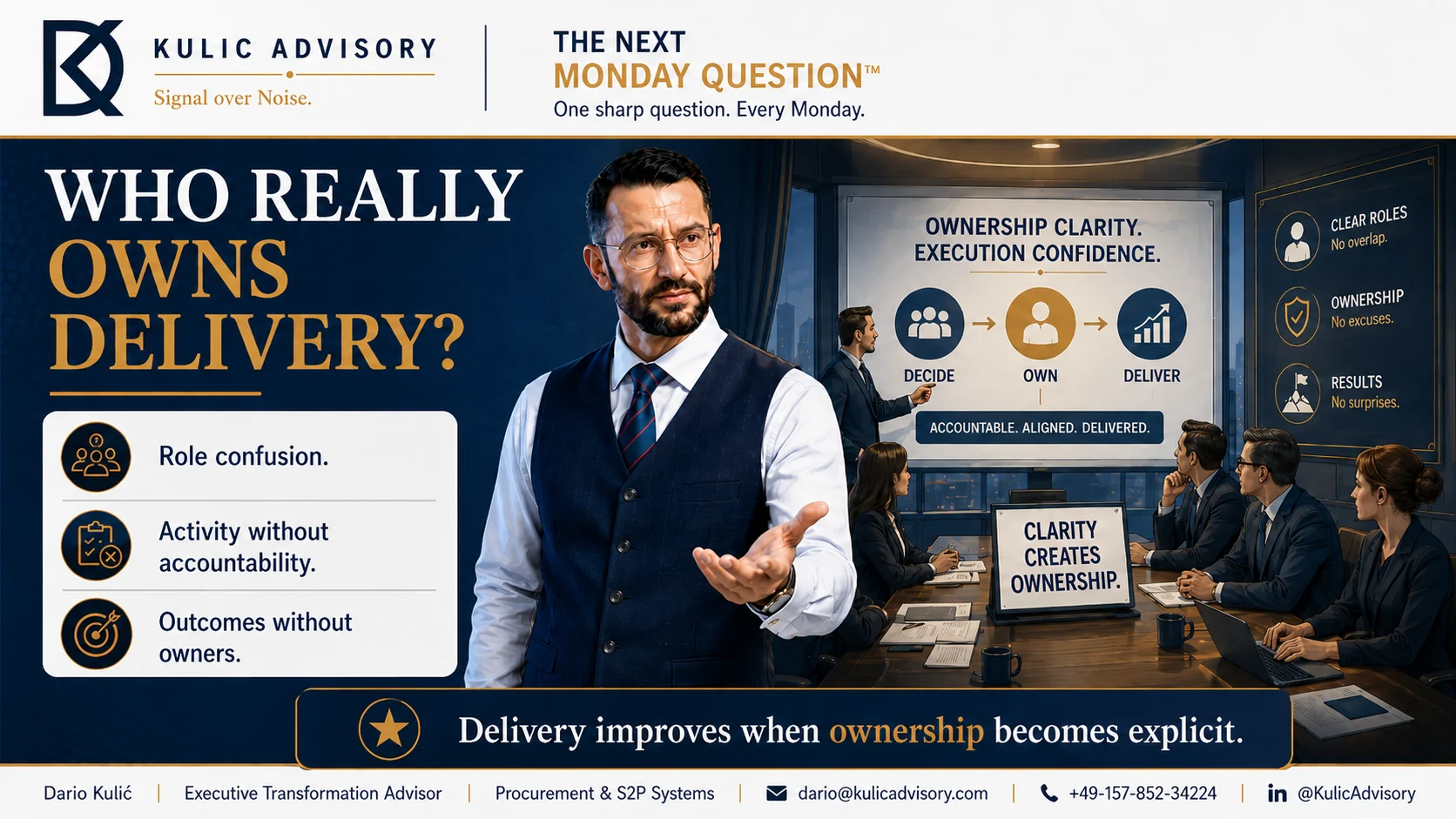
S2P rollout is live, but ownership is unclear.

  • Symptom: adoption and regional behavior diverge.
  • Break: decision rights and handoffs were never made explicit.
  • First move: Executive Diagnosis.
Diagnose this pattern
02

CFO / Shared Services

Value tracking exists, but savings do not move cleanly into reality.

  • Symptom: governance meetings multiply.
  • Break: accountability and escalation rhythm conflict.
  • First move: System Review.
Review the system picture
03

COO / Transformation Executive

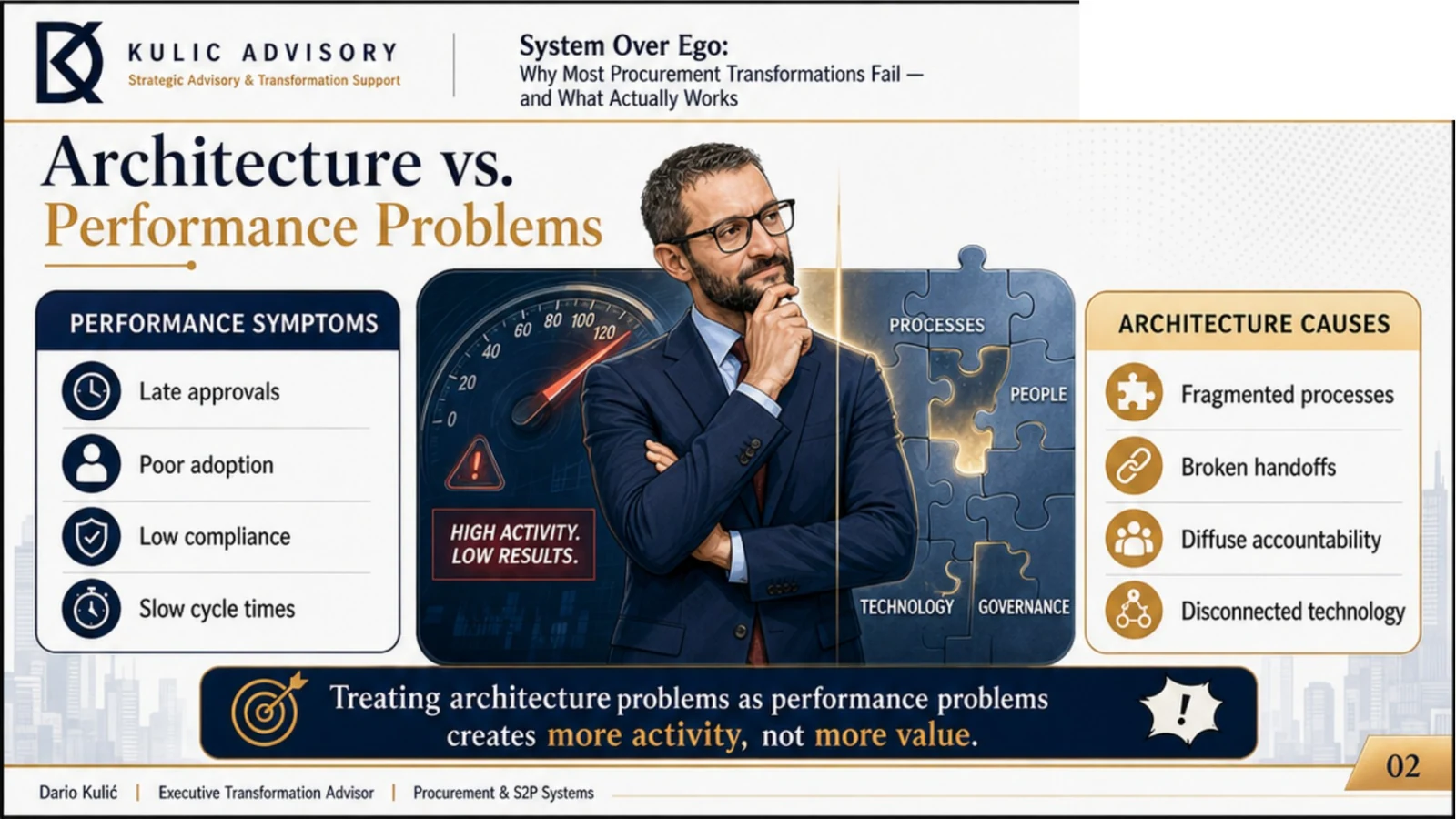
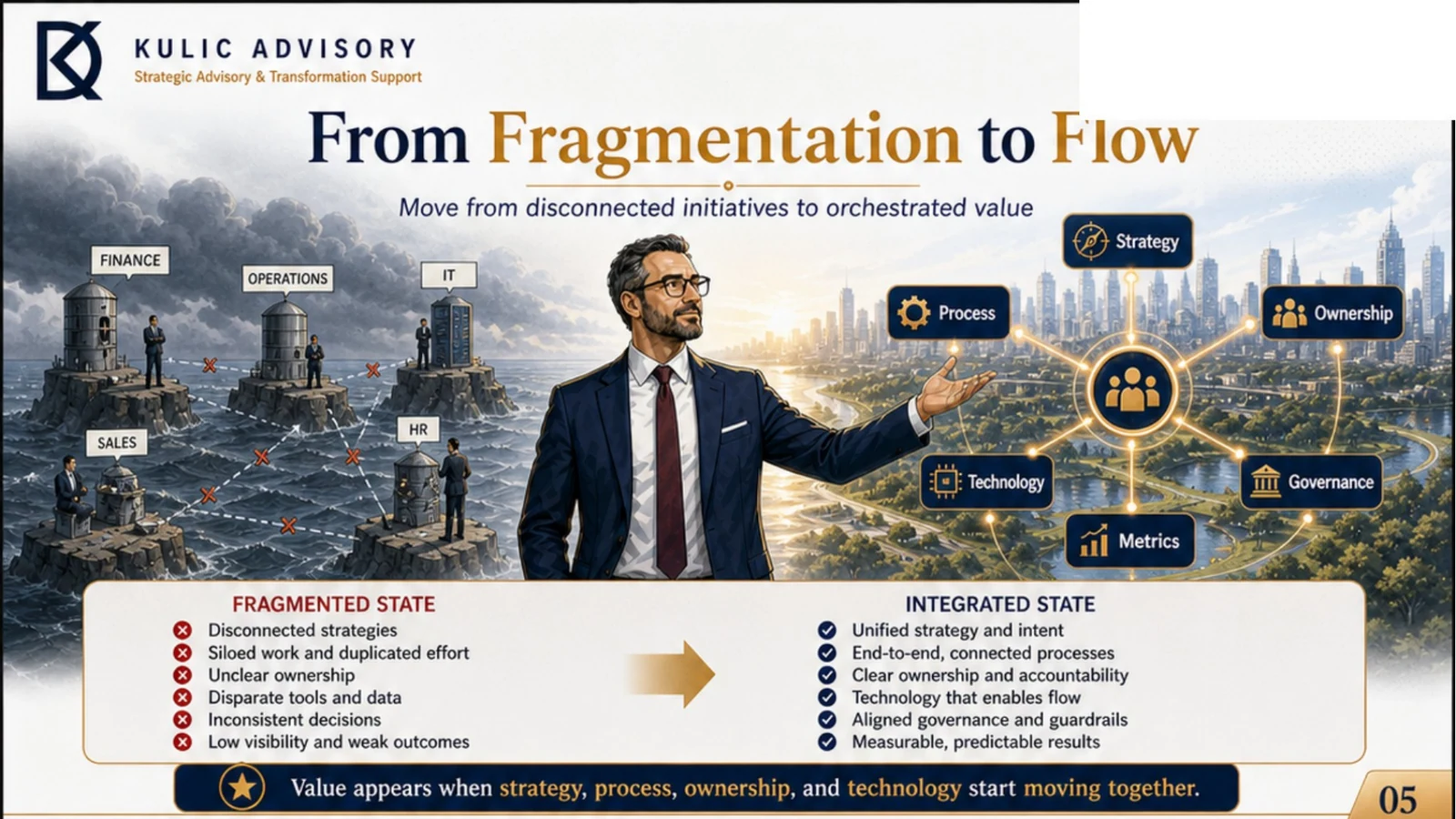
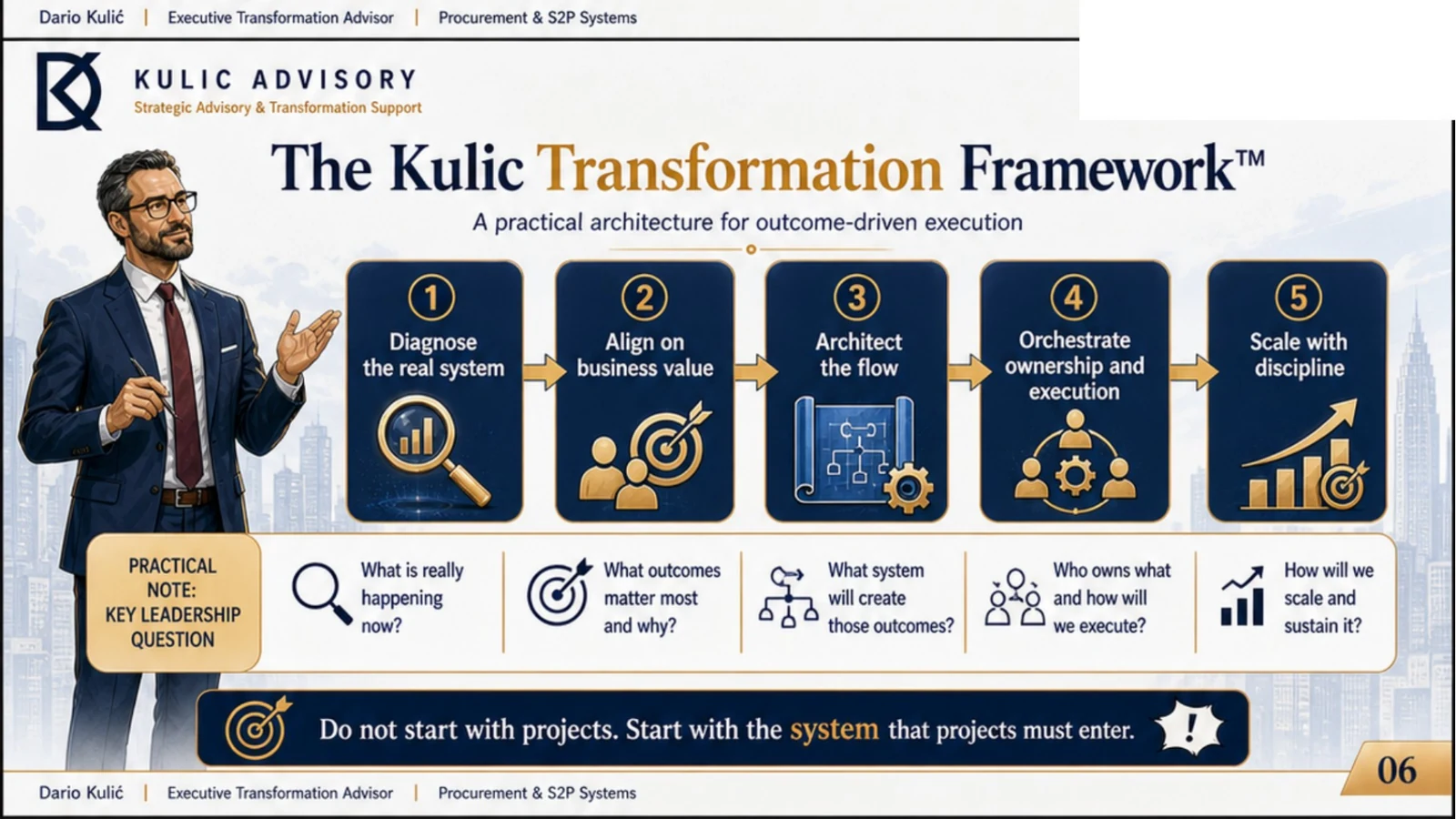
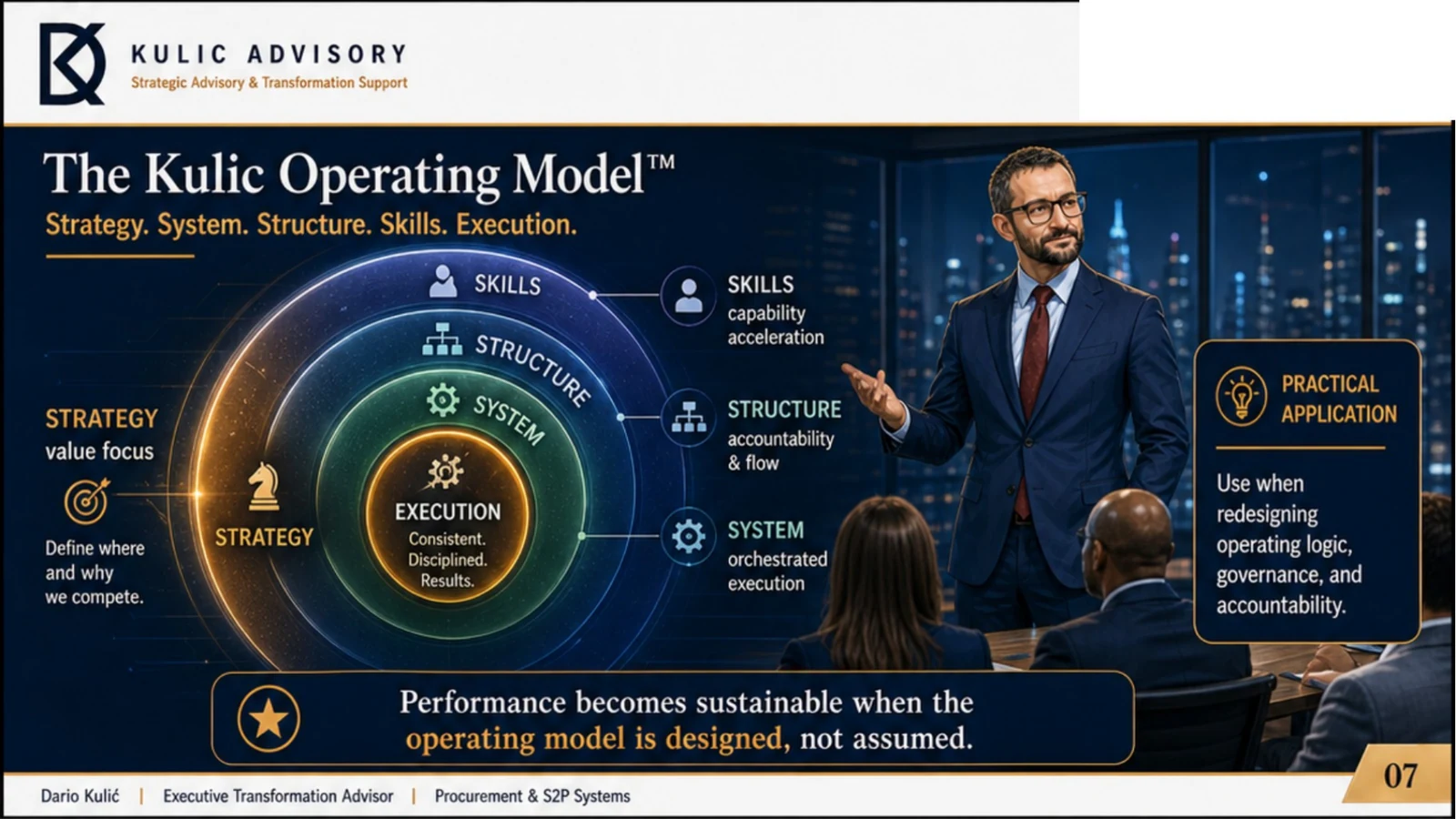
Too many initiatives compete without one execution architecture.

  • Symptom: alignment is high, momentum is low.
  • Break: no shared operating model for decisions.
  • First move: Architecture Sprint.
Open architecture path

Paper use cases

Four practical paper cases.

Concrete paper examples for pricing logic, M&A strategy, cold-storage expansion, and platform leadership.

Risk-based pricing model use case visual.
Case 01

Risk-Based Pricing Model

Commodity pricing hides the value of reliability, criticality, integration, and risk removal.

  • Intervention: price the risk removed, not only the space used.
  • Output: pricing drivers, value logic, and maturity path.
  • Lesson: premium pricing needs a premium risk story.
M&A strategy map use case visual.
Case 02

M&A Strategy Map

Growth depends on acquiring capabilities, relationships, and platform logic, not only assets.

  • Intervention: map archetypes, criteria, deal structure, and execution sequence.
  • Output: clearer target attractiveness and integration logic.
  • Lesson: acquisition strategy must already contain the operating model.
Cold storage business expansion use case visual.
Case 03

Cold Storage Business Expansion

A storage provider needs to move from capacity and handling toward higher-value platform services.

  • Intervention: define expansion layers across operations, orchestration, data, specialization, and embedded models.
  • Output: strategic pathways to higher revenue, differentiation, and retention.
  • Lesson: growth comes from owning more of the risk system.
Cold storage strategy platform leader use case visual.
Case 04

Cold Storage Platform Leader

The strategic question is how to become indispensable for critical pharma supply chains.

  • Intervention: connect value curve, risk ownership, compliance, infrastructure, and client lock-in.
  • Output: platform-leader narrative and practical growth architecture.
  • Lesson: cold storage becomes strategic when it owns risk, not only square meters.
Packaging complexity reduction use case visual.
Case 05

Packaging Complexity Reduction

Packaging complexity slows launches when SKU, artwork, supplier, approval, and material decisions move without one governed route.

  • Intervention: map variant logic, approval ownership, supplier constraints, and change-control rhythm.
  • Output: a clearer packaging execution path with fewer loops and cleaner launch readiness.
  • Lesson: packaging performance is a decision-system problem before it is a design problem.
Labeling and serialization time-to-market use case visual.
Case 06

Labeling / Serialization Speed

Launch readiness breaks when label data, serialization rules, market requirements, and approval gates are not synchronized.

  • Intervention: define the label-to-market decision flow, owner model, and exception route.
  • Output: faster readiness, fewer late corrections, and visible accountability across the launch path.
  • Lesson: label speed comes from ownership clarity, not from chasing harder at the end.

Proof stories

From symptom to decision.

Each story is anonymized and deliberately operational: the buyer pain, the execution break, the architecture move, and the usable outcome.

01 / S2P Ownership Break

Same process on paper. Different reality by country.

Situation
Multi-entity S2P rollout with uneven adoption, regional workarounds, and unclear escalation logic.
Break
No shared process taxonomy, no explicit owner map, and no decision path across procurement, finance, and operations.
Move
Map owner, decision, handoff, and governance cadence before pushing more rollout activity.
Outcome
A clearer 30-day move, fewer recurring blockers, and a more credible adoption path.
Diagnose this break
02 / AI Readiness Before Automation

AI looked attractive. The workflow was not decision-ready.

Situation
Leadership wanted automation while ownership, data responsibility, exception handling, and value logic were still unstable.
Break
The organization was close to automating confusion instead of improving execution.
Move
Test AI readiness against signal, owner, decision, action, data, governance, and value logic.
Outcome
Go/no-go clarity and a safer sequence for AI-enabled execution.
Open architecture path
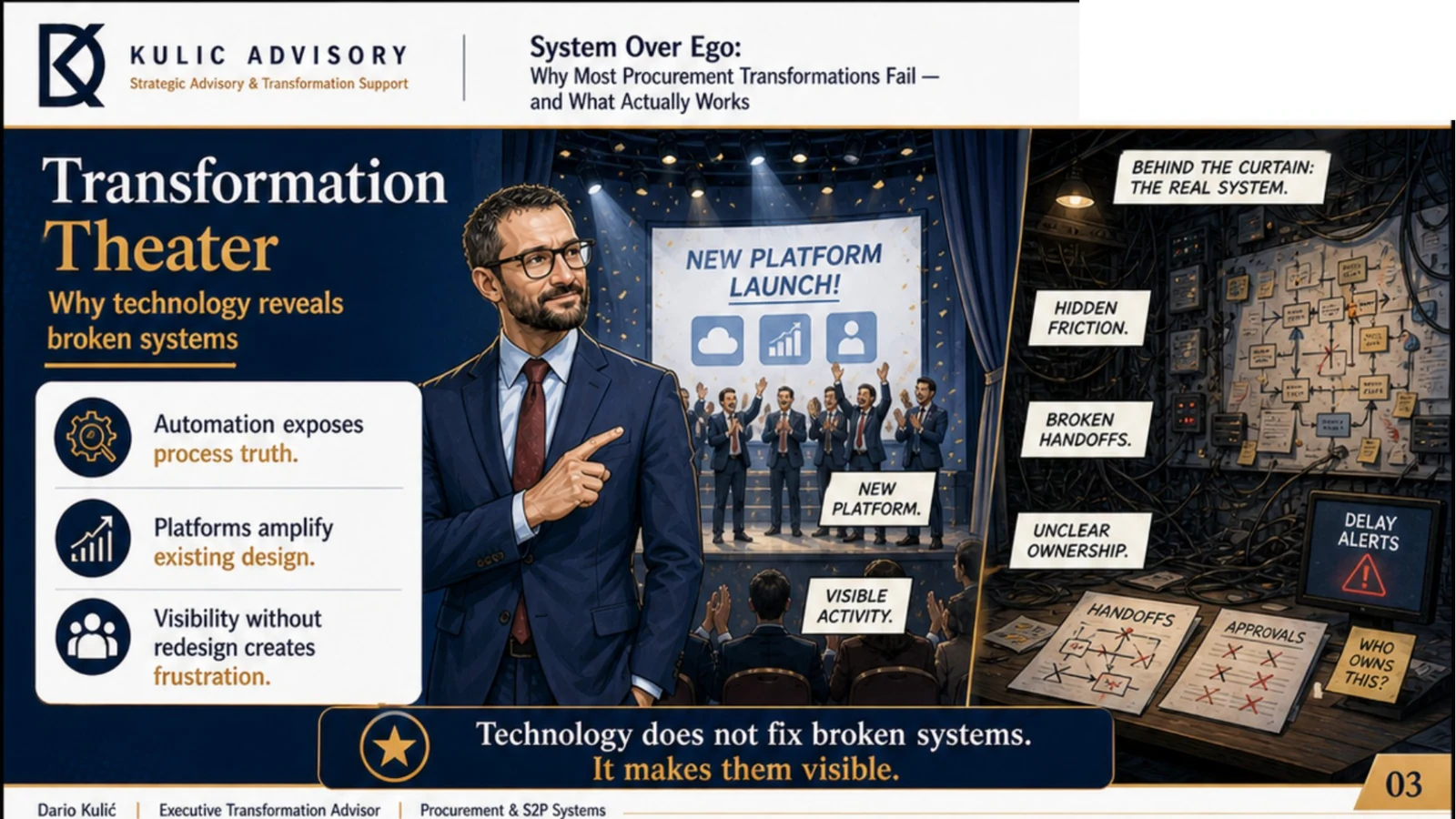
03 / Transformation Theatre

Lots of initiatives. Monday still looked the same.

Situation
Many projects, meetings, dashboards, and steering rounds existed, but the same decisions kept returning.
Break
Activity replaced execution architecture: mandate, owner, decision rights, governance, and value were not connected.
Move
Diagnose the mandate and identify one practical decision move before scaling spend or slides.
Outcome
A sharper leadership conversation and one concrete next move instead of another generic transformation loop.
Clarify mandate