
Diagnose
For leaders who need to understand where execution breaks.
- Transformation Diagnostics
- Open Advisory Hours™
- Operating Model Review
Signal over noise.
Execution Architecture Advisory for Procurement, S2P, Operating Model, and Transformation Leaders.
I help leaders turn fragmented procurement, S2P, and transformation activity into governed execution systems.
Clear ownership, faster decisions, measurable business impact, and fewer Monday meetings that only explain why nothing moved.
Transformation does not fail because people lack ambition. It fails when the system gives them no clear way to execute.
The problem
Most transformations do not lack ambition. They lack execution architecture.
Another initiative can feel like hope, until Monday proves nobody removed the weight.
When decisions feel unsafe, calendars become the place courage goes to hide.
If the truth needs twelve views, the system is already asking for help.
Escalation is the sound of ownership arriving too late.
The better the narrative gets, the easier it becomes to avoid the hard decision.
The painful part is not that people are slow. It is that the system makes progress expensive.
When architecture is weak, effort becomes the compensation mechanism.
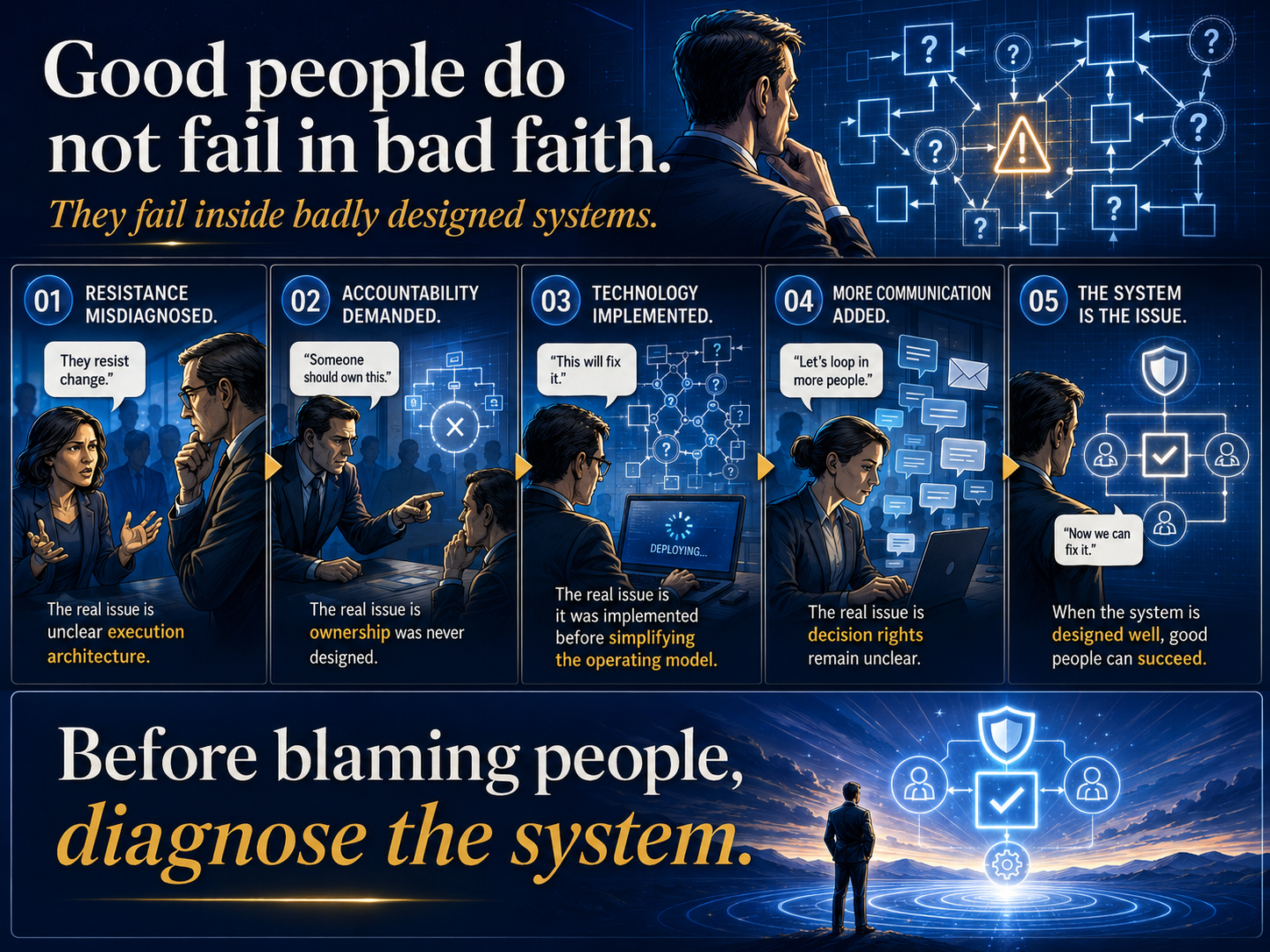
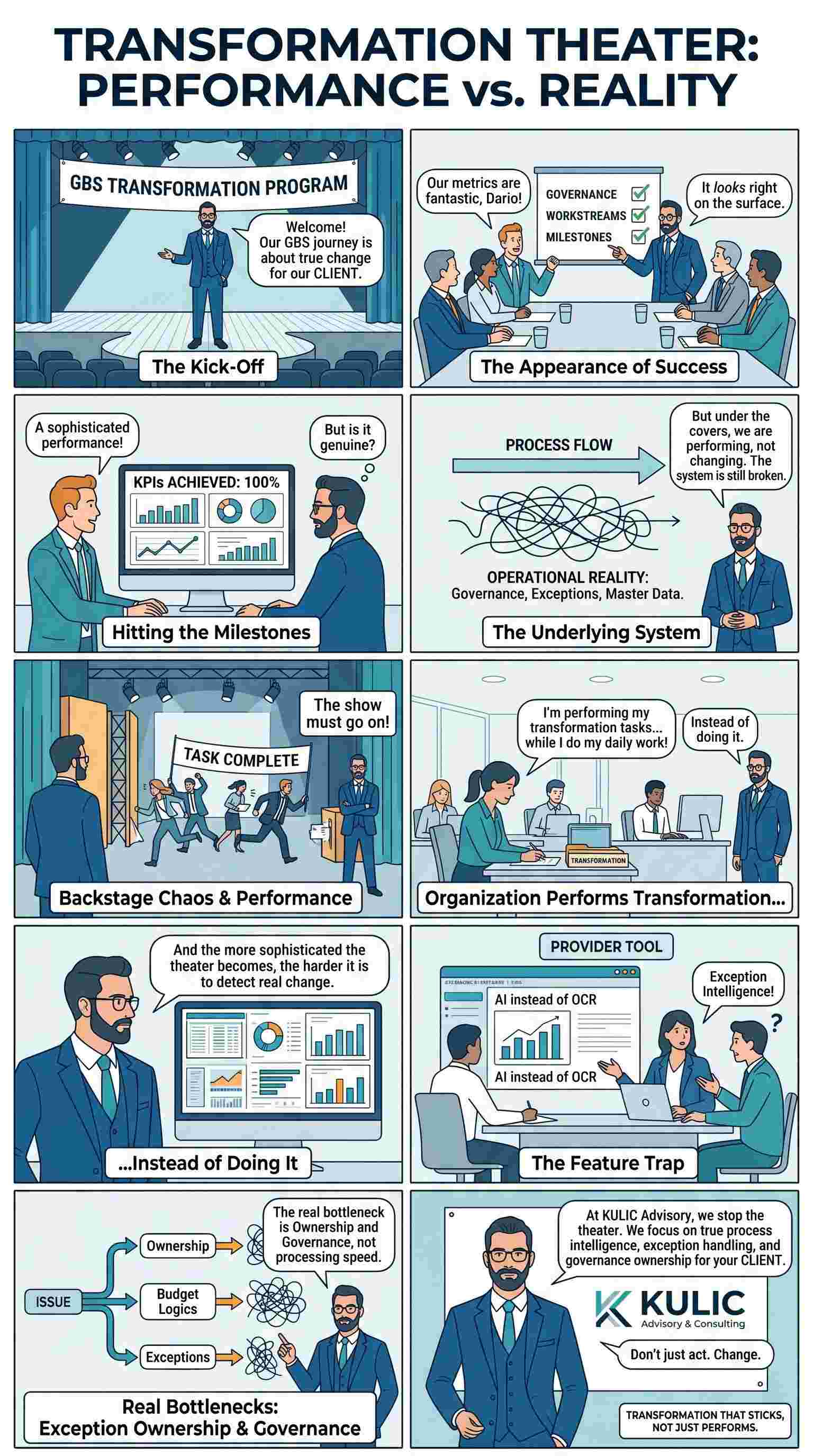
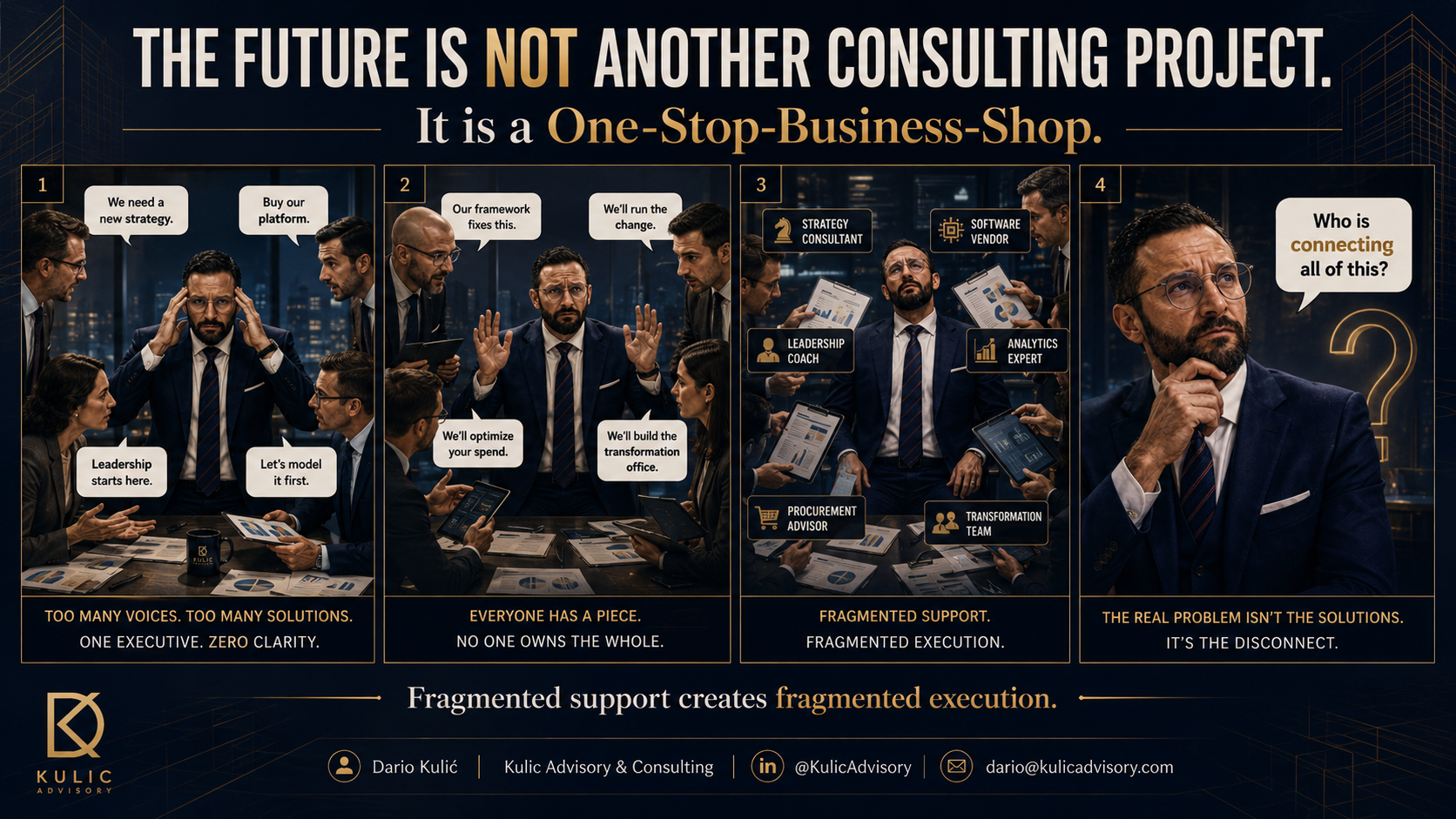
Comic storytelling proof
The comic format makes the advisory message tangible: activity is not impact, dashboards are not ownership, and another workshop is not execution architecture.
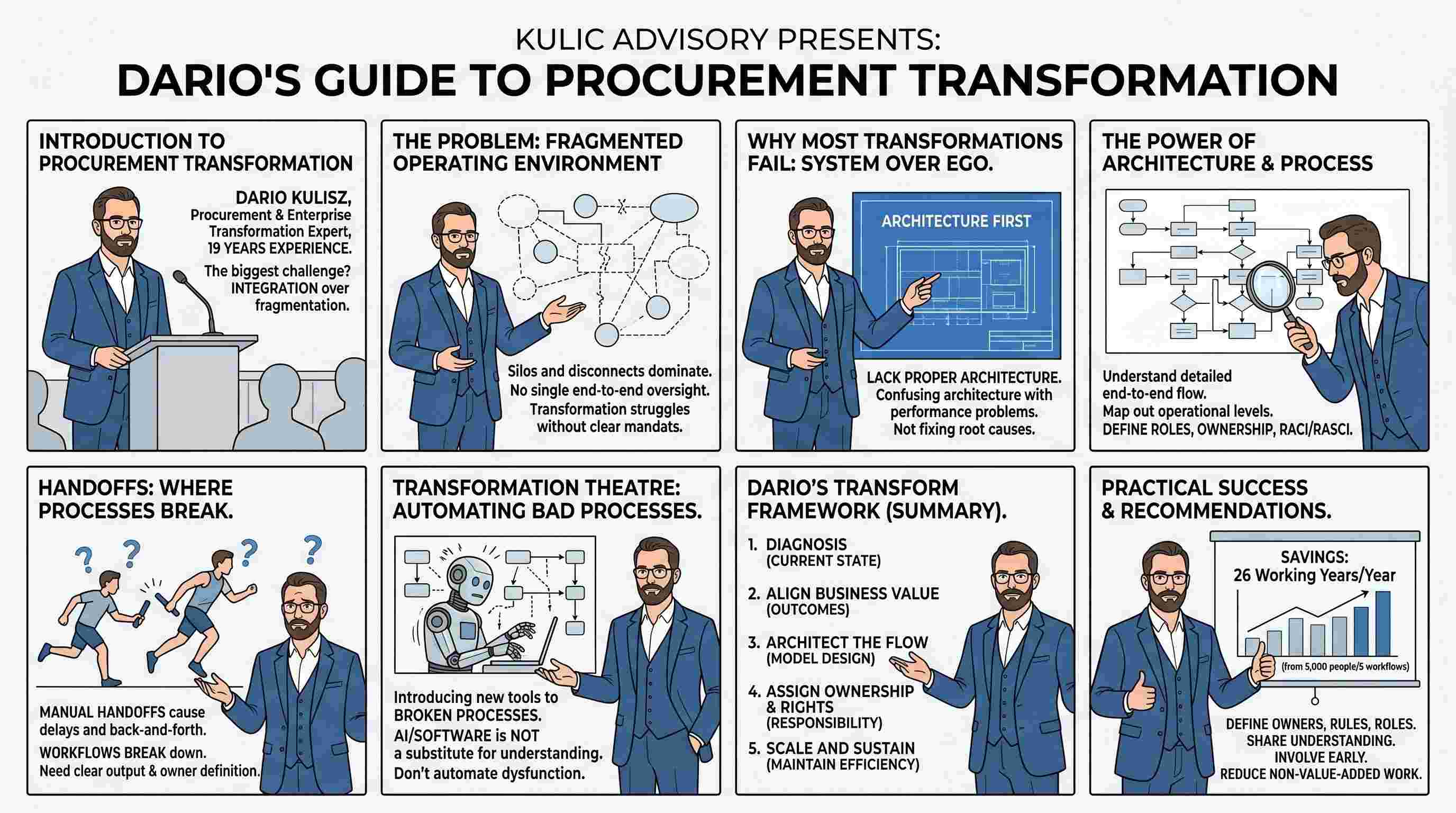
What I do
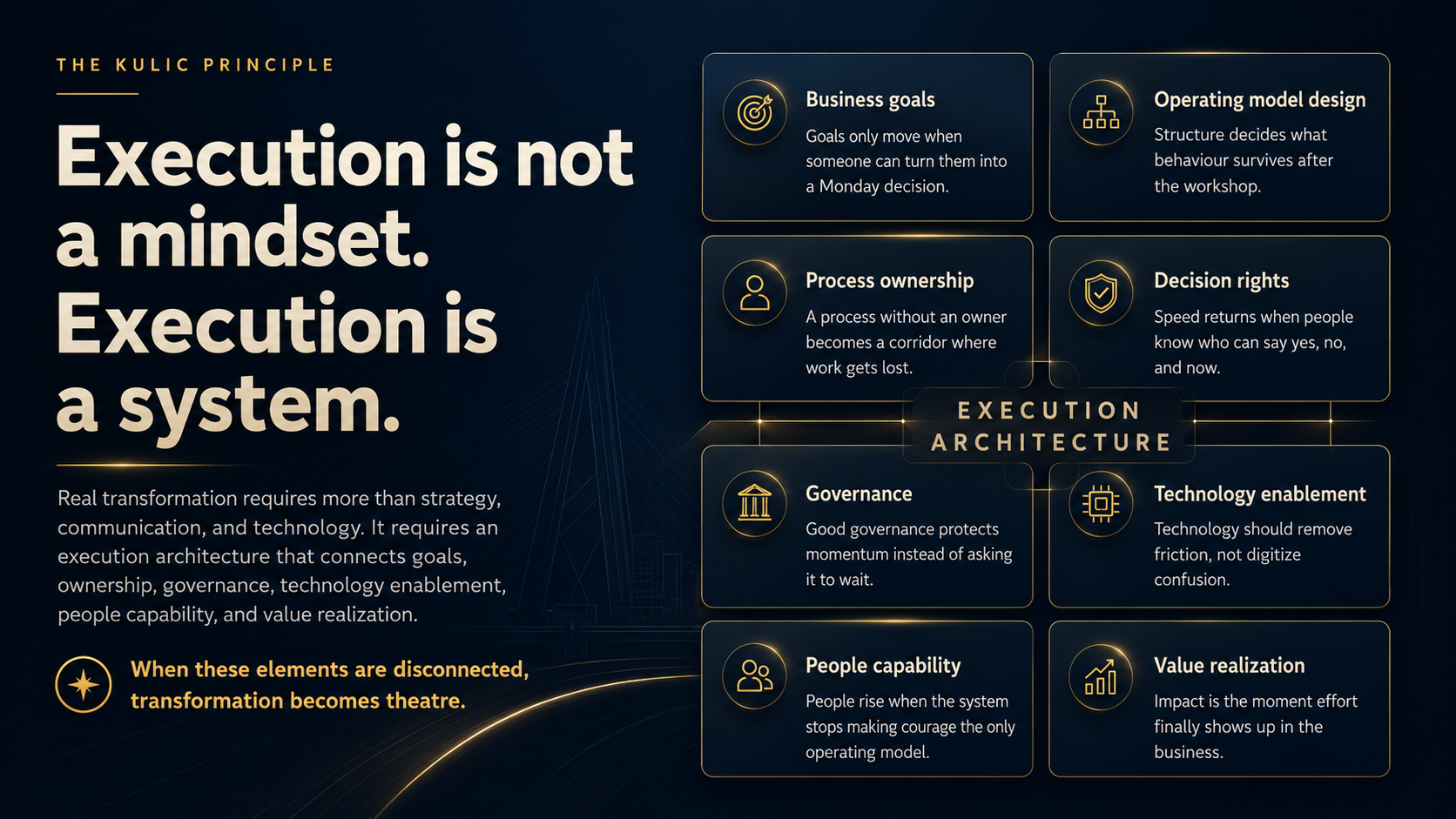
The work focuses on the architecture that sits between strategy and results. Not more noise. Not another generic transformation narrative. Not a slide deck without execution power.
If everyone owns it, nobody can decide it.
Execution usually breaks at the handoff nobody designed.
A process is not working when progress depends on escalation.
Automation scales the operating model you already have.
Governance should make decisions safer, not slower.
A bigger mandate needs a stronger system, not louder coordination.
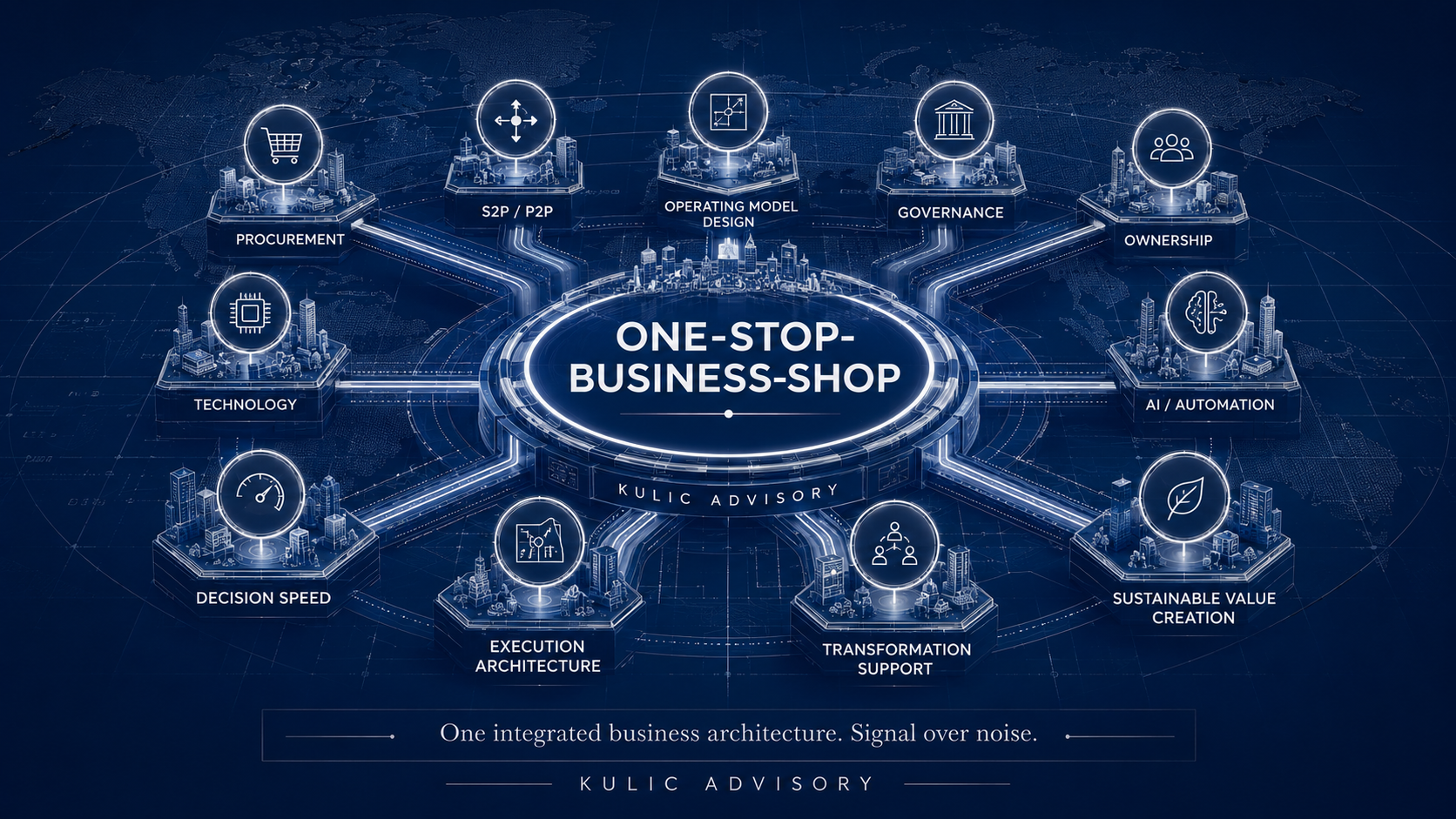
One-Stop-Business-Shop
Most firms sell strategy, process, technology, change, and analytics as separate workstreams. The business problem rarely lives in one module. It lives between them.
The work connects the layers that must move together.
Fastest entry point
Real problems. Live diagnosis. No slides.
For the moment when the issue is too expensive to keep discussing internally, but too urgent for a six-week consulting ramp-up. Bring the real problem. We diagnose the execution system behind it and identify the next move.
Use it before you commission a large assessment, buy another generic workshop, or pay for a heavyweight executive service when what you need first is a sharp, senior diagnosis of the real break.
Open Advisory Hours™ start at €900. The default recommendation is Executive Diagnosis: enough depth to see the system, without turning the first move into a full consulting project.
Secure your slotAdvisory buyer paths
Three clear entry points replace the brochure grid: diagnose the break, design the system, or mobilize leaders around a sharper execution logic.
For leaders who need to understand where execution breaks.
For organizations that need a stronger execution system.
For leaders who need language, alignment, and momentum.
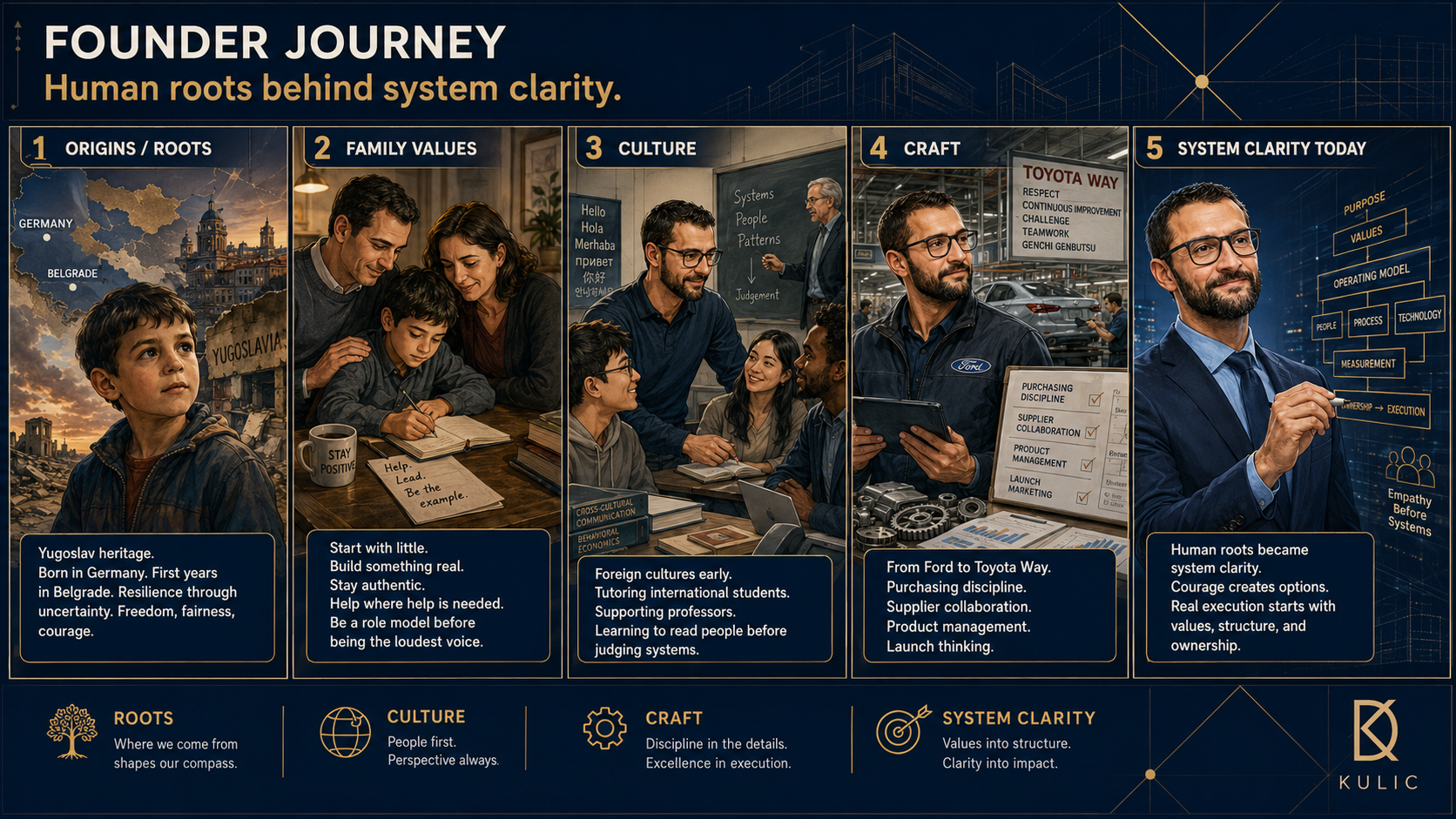
Founder story
The advisory point of view did not come from a theory desk. It was built across migration, family values, cultures, procurement rooms, Toyota discipline, public stages, and real transformation pressure.
That is why the work is direct but human: fix the system, protect the people carrying it, and make execution possible without turning complexity into theatre.
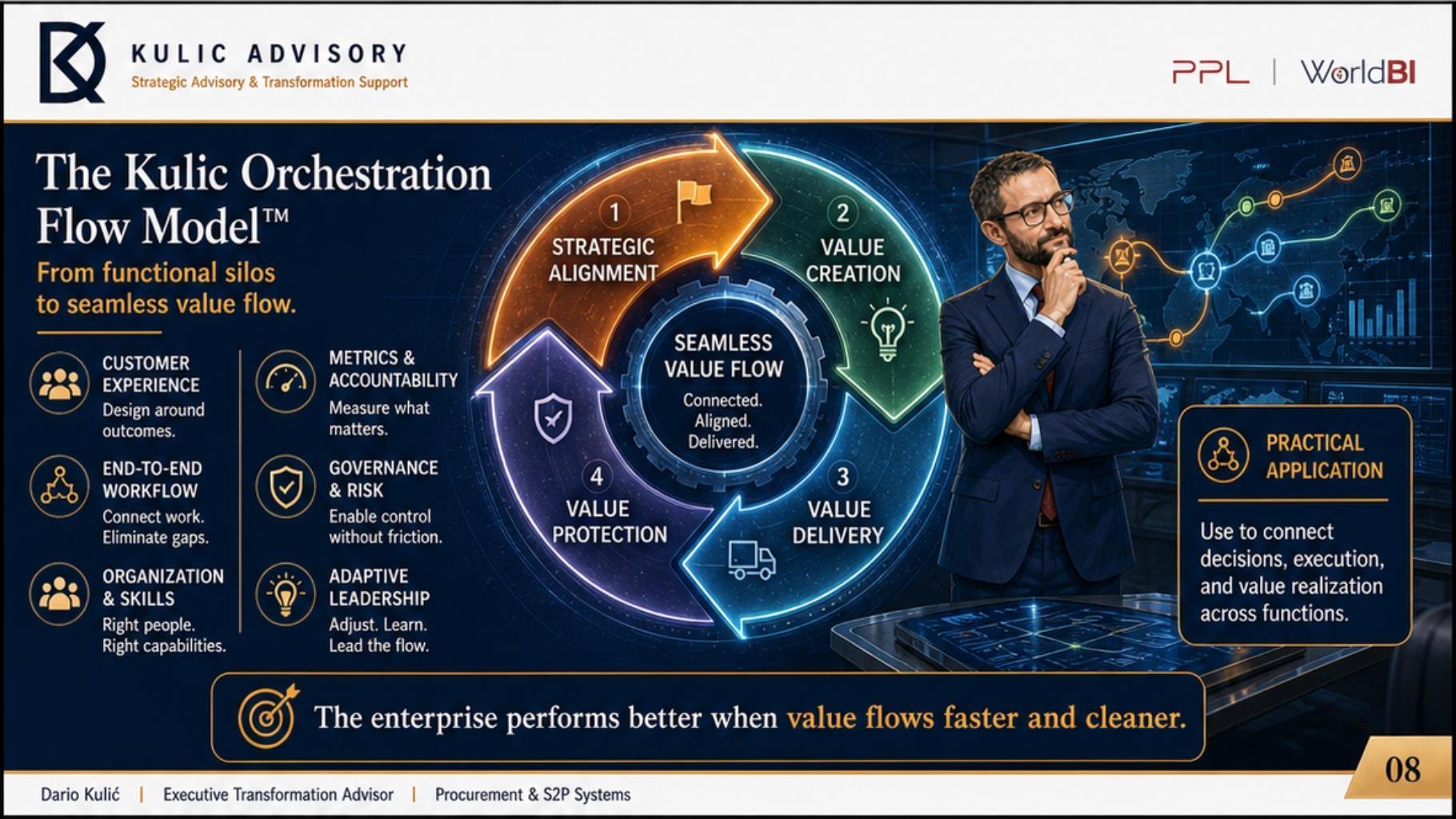 Inside the keynote
Signature keynote
System Over Ego explains the Kulic Principle in the most direct way: signal over noise, transformation theatre, ownership, operating model design, and human-centered efficiency.
Proof architecture
Proof is organized around outcomes, public authority, and tangible signals. Then the anonymized examples show what clarity looks like when it leaves the slide and becomes usable.

Anonymized client example
A 12-month transformation roadmap translating stakeholder alignment, RASIC clarity, process taxonomy, standardization, and rollout governance into a visible execution path.
Review exampleCurated insights
No brochure wall. Just selected executive assets for leaders who want to test the thinking before a first conversation: value book, expertise papers, service briefs, and the signature keynote.
Start the conversation
You have an execution architecture problem.
Let us diagnose where the system breaks and what needs to be redesigned so execution becomes possible.
Dario Kulic